In today’s fast-growing pharmaceutical and cosmetic industries, ointment and cream formulations play an important role in everyday healthcare and personal care routines. From medicinal skin treatments to cosmetic creams, the demand for high-quality, hygienic, and scalable production systems has never been higher.
At Kyra International, a trusted Manufacturer & Exporter & Supplier in Mumbai, India, ointment cream manufacturing plants are designed to meet modern production needs while maintaining strict quality and safety standards. These plants help manufacturers produce consistent, stable, and contamination-free ointments and creams on a commercial scale.
This blog explains what an Ointment Cream Manufacturing Plant is, how it works, its key components, applications, benefits, and why choosing the right plant is essential for long-term success.
What Are Ointment Cream Manufacturing Plants?
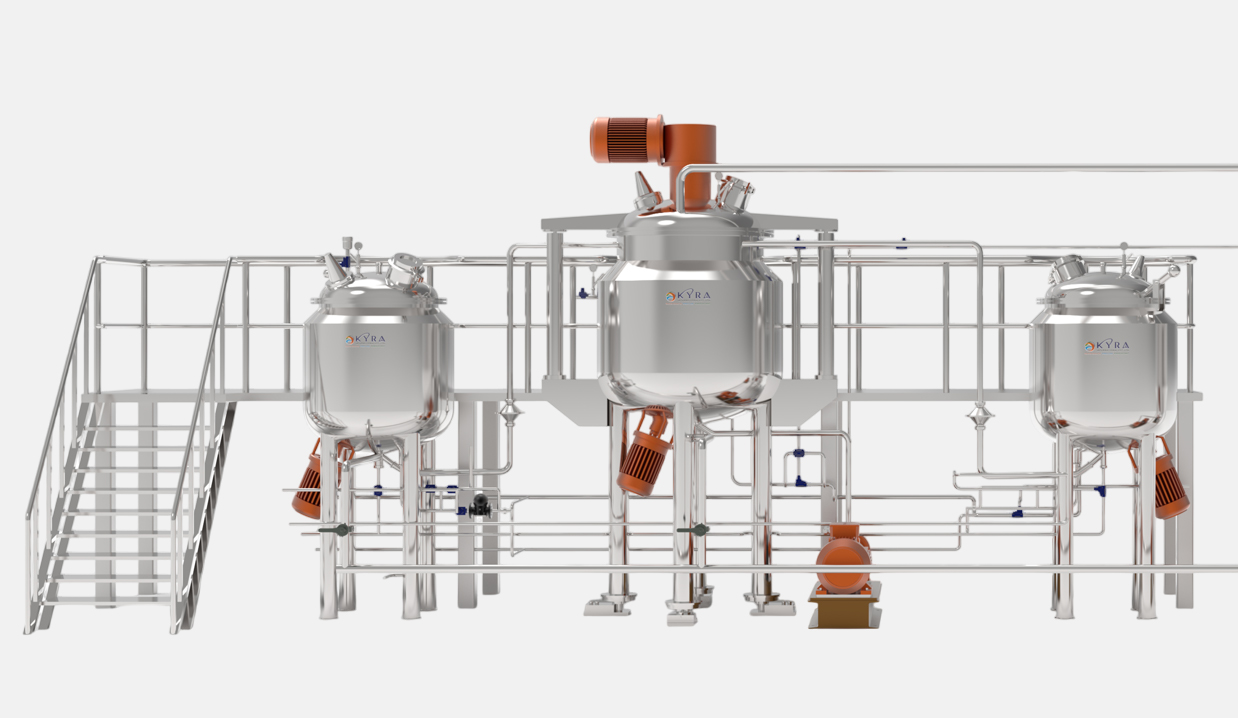
An Ointment Cream Manufacturing Plant is an integrated system of machines and equipment used to manufacture semi-solid formulations such as creams, ointments, gels, and lotions. These plants are designed to ensure stable mixing, controlled heating and cooling, accurate blending, and hygienic handling of ingredients.
Different small batch manual processes, modern manufacturing plants automate critical stages of production, reducing human error and ensuring consistent product quality.
Why Ointment and Cream Manufacturing Needs Specialized Plants
Ointments and Creams are sensitive formulations. Even small variations in temperature, mixing speed, or ingredient ratio can affect texture, stability, and shelf life. This is why pharmaceutical and cosmetic manufacturers depend on dedicated manufacturing plants.
Specialized plants help in:
- Achieving stable consistency
- Preventing contamination
- Maintaining batch-to-batch consistency
- Scaling production effectively
- Following with GMP standards
A well-designed Ointment Cream Manufacturing Plant ensures that every batch meets regulatory and consumer expectations.
How an Ointment Cream Manufacturing Plant Works
The production process typically follows a structured flow to maintain quality and efficiency.
-
Raw Material Preparation:
Ingredients such as oils, waxes, fragrances, active pharmaceutical ingredients (APIs), and water are measured and prepared separately.
-
Heating Phase:
Oil and water phases are heated in separate vessels to the required temperature. Controlled heating ensures proper melting and blending of ingredients.
-
Mixing and Emulsification:
Once the phases reach the desired temperature, they are combined in a main manufacturing vessel. High-shear mixers or homogenizers ensure proper emulsification and smooth texture.
-
Cooling Process:
After mixing, the formulation is slowly cooled while stirring continues. This step stabilizes the product and improves consistency.
-
Cooling System:
High-speed friction generates heat, so an efficient cooling jacket maintains the required operating temperature.
-
Transfer and Storage:
The finished cream or ointment is transferred to storage tanks or directly to filling machines for packaging.
Key Components of an Ointment Cream
Manufacturing Plant
A complete manufacturing plant consists of several essential components working together smoothly.
-
Manufacturing Vessel:
The core unit where mixing, heating, cooling, and emulsification happen. Usually made of stainless steel 316L/316 to ensure hygiene and strength.
-
High-Speed Stirrer and Homogenizer:
These ensure uniform mixing and remove lumps, resulting in smooth and stable formulations.
-
Heating and Cooling System:
Jacketed vessels allow accurate temperature control, which is critical for ointment and cream stability.
-
Vacuum System:
Helps remove air bubbles from the product, improving texture and shelf life.
-
Control Panel:
Automates temperature, mixing speed, and processing time for consistent results.
Types of Products Manufactured Using These Plants
Ointment Cream Manufacturing Plants are highly adjustable and can produce a wide range of semi-solid products, including:
- Pharmaceutical Ointments
- Medicated Creams
- Cosmetic Creams
- Herbal Formulations
- Gels and Lotions
- Dermatological Products
This flexibility makes them suitable for the pharmaceutical, cosmetic, and personal care industries.
Applications Across Industries
1. Pharmaceutical Industry:
-
Used for producing medicinal ointments, antifungal creams, antibiotic formulations, and pain-relief products.
2. Cosmetic Industry:
-
Ideal for manufacturing face creams, moisturizers, foundation, sunscreens, and anti-aging products.
3. Personal Care Industry:
-
Used for lotions, balms, and skin-care products requiring smooth texture and consistency.
-
The ability to maintain hygiene and quality makes these plants important across industries.
Benefits of Using a Modern Ointment Cream Manufacturing Plant
Investing in a modern manufacturing plant offers several advantages:
-
Consistent product quality
-
Reduced manual involvement
-
Higher production effectiveness
-
Work with GMP standards
-
Improved safety and hygiene
-
Scalability for future growth
These benefits directly impact product safety and brand reputation.
Importance of GMP Compliance in Manufacturing Plants
Good Manufacturing Practices (GMP) are critical in pharmaceutical and cosmetic production. A GMP-compliant Ointment Cream Manufacturing Plant ensures:
- Clean and hygienic processing
- Traceability of batches
- Reduced contamination risk
- Regulatory compliance
Modern plants are designed with smooth surfaces, easy cleaning systems, and automated controls to meet GMP requirements.
Factors to Consider When Choosing an Ointment Cream Manufacturing Plant
Before investing, manufacturers should consider:
- Production capacity requirements
- Type of products to be manufactured
- Level of automation
- Compliance with regulatory standards
- After-sales support and service
Choosing the right plant ensures long-term operational efficiency and product consistency.
Role of Automation in Modern Manufacturing Plants
Automation has transformed Ointment and Cream Manufacturing. Automated systems:
- Reduce human error
- Improve batch consistency
- Increase production speed
- Provide better process control
With programmable logic controllers (PLCs) and digital monitoring, manufacturers gain better control over the entire production cycle.
About Kyra International
Kyra International is a leading Manufacturer & Exporter, & Supplier in Mumbai, India, specializing in pharmaceutical and cosmetic processing equipment. With years of industry expertise, Kyra International designs and supplies advanced ointment cream manufacturing plants that meet global quality standards.
The company focuses on delivering equipment that combines efficiency, strength, and ease of operation, supporting manufacturers in achieving consistent and high-quality production.
Why Choose Kyra International’s Ointment Cream Manufacturing Plant?
- Strong stainless-steel construction
- GMP-compliant design
- Customizable capacities
- Advanced mixing and homogenization
- Accurate performance and long service life
- Strong technical and after-sales support
Kyra International works closely with clients to understand their production needs and provide customized solutions.
Supporting Global Pharmaceutical and Cosmetic Growth
As an experienced exporter and supplier, Kyra International supports manufacturers not only in India but also in international markets. Their plants are designed to meet global compliance standards, helping businesses expand confidently.
Future Trends in Ointment and Cream Manufacturing
The industry is evolving with:
- Increased automation
- Energy-efficient systems
- Advanced homogenization technology
- Smart control panels
Manufacturing plants are becoming more effective, sustainable, and user-friendly to meet growing market demands.
FAQs on Colloidal Mill
Conclusion
An Ointment Cream Manufacturing Plant is the backbone of modern pharmaceutical and cosmetic production. It ensures product consistency, hygiene, efficiency, and regulatory compliance, all critical factors for success in competitive markets.
With advanced design, GMP compliance, and safe performance, Kyra International, a leading Manufacturer & Exporter, & Supplier in Mumbai, India, continues to support manufacturers with efficient and future-ready Ointment Cream Manufacturing solutions.